Electrical engineering · data science · computer vision

I build technology for demanding environments.

I’m Meshach Emke, a UBC electrical engineering student and BC Wildfire Service crew member. I work across data, computer vision, CAD, and field operations—with projects ranging from a 35,000-image wildfire detection dataset to a 9,000-part excavator assembly.

60,000geophysical data points processed
35,000images in wildfire dataset
9,000+parts across excavator project
75%motor-mount weight reduction

Selected work / 01–04

Projects

Applied AI, data engineering, mechanical design, and environmental sensing—each grounded in a real operational problem.

02 / Data science internship

Geothermal Data Pipeline

A geophysical-data workflow developed for New Mantle Technologies to support an AI model for predicting geothermal potential.

Scale

Processed approximately 60,000 geophysical data points assembled from well-log databases and technical plots.

Method

Filtered source databases in Google Sheets and used WebPlotDigitizer to recover structured values from graphical well-log records.

Result

Linked every data point to its well’s physical coordinates, enabling location-aware training data for the prediction model.

  • Data engineering
  • Geospatial data
  • Google Sheets
  • WebPlotDigitizer
  • AI datasets
03 / Mechanical design

9,000-Part Excavator CAD Model

A detailed, functioning excavator reconstructed from technical drawings as a coordinated SolidWorks team assembly.

Modelling

Analyzed technical drawings and recreated more than 150 unique parts in CAD.

Assembly

Built a subassembly containing over 4,000 parts while maintaining correct mates, hierarchy, and mechanical relationships.

Coordination

Managed compatibility between independently designed sections in a final project encompassing more than 9,000 parts.

  • SolidWorks
  • 150+ unique parts
  • Assembly design
  • Technical drawings
Watch project video
04 / Environmental sensing

Algae Monitoring Buoy

A floating prototype that measures pH and temperature to help identify water conditions associated with algae blooms.

Challenge

Create a stable, field-ready platform that could gather useful data on the water while protecting its electronics.

Build

Integrated two water-quality measurements—pH and temperature—into a buoy developed through iterative prototyping and testing.

Outcome

Placed fifth in the APSC 171 final design competition and demonstrated the complete prototype in a five-minute technical walkthrough.

  • pH sensing
  • Temperature sensing
  • Prototyping
  • Environmental monitoring
Watch project video

Experience / field + design

Built for context.

Technical decisions shaped by the people, environments, and constraints around them.

2026

BC Wildfire Service

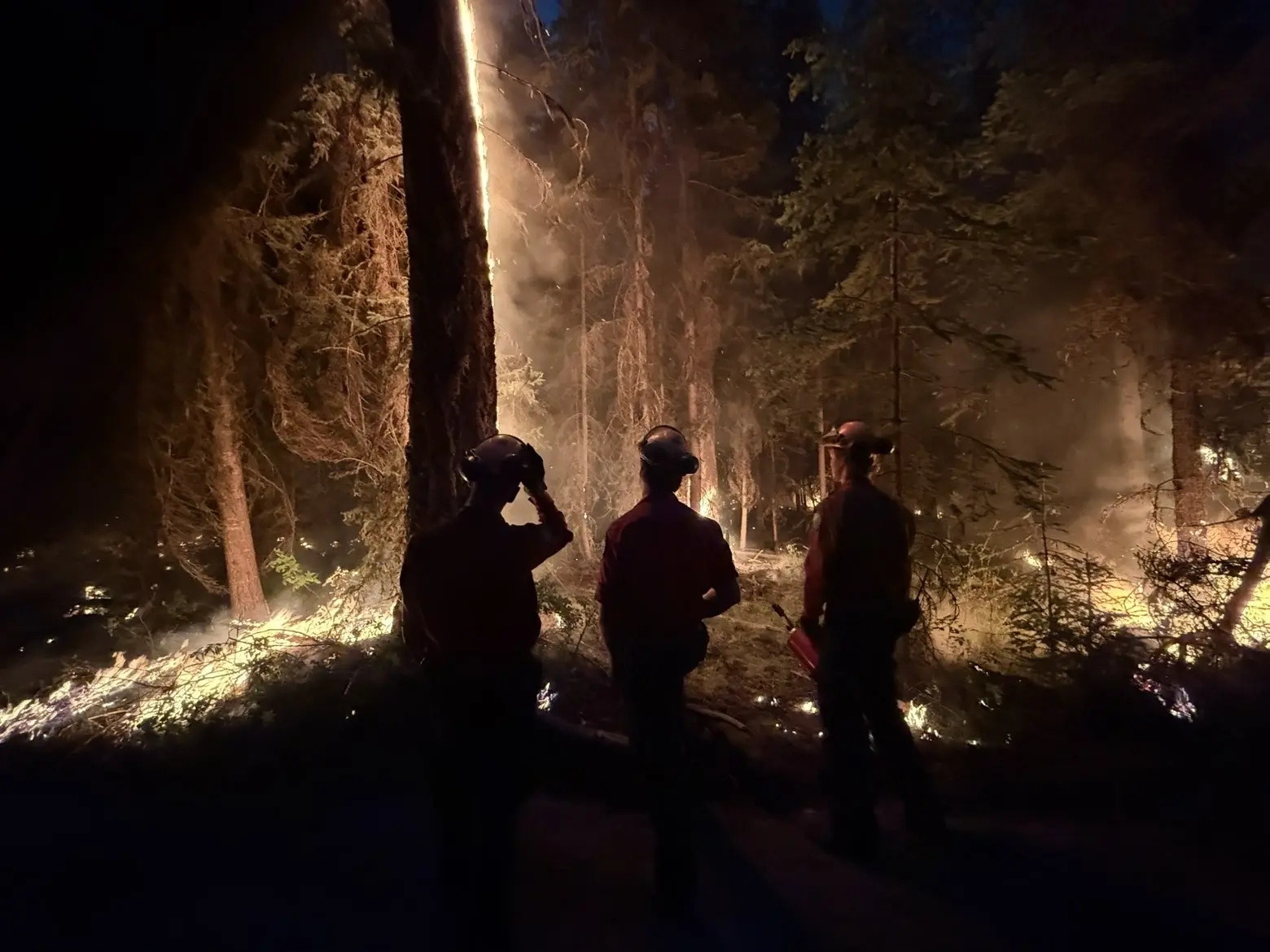
Type 1 Unit Crew Member operating chainsaws to WorkSafeBC standards, cold-trailing hotspots, and maintaining daily equipment readiness across demanding terrain and fuel types.

2025–26

UBCO Aerospace Club

Designed foam and carbon-fibre-reinforced UAV wings and control surfaces; contributed to mould optimization that reduced motor-mount weight by 75%.

2021–Present

Search & Rescue

Trained in ice, boat, flat-water, river, and ground search and rescue, with an emphasis on dependable equipment and rapid response.

About / operating principles

Engineering informed by the field.

My experience spans AI data pipelines, computer vision, fabrication, drones, and frontline wildfire operations. That mix has taught me to think beyond whether something works in a controlled setting—to consider weight, weather, bandwidth, maintainability, and what failure actually costs.

I hold an 81.7% cumulative average in UBC Electrical Engineering, earned Dean’s List standing in 2026, and received the $120,000 Schulich Leadership Scholarship in 2025.

01Build to learn

Prototype early enough for reality to influence the design.

02Design for context

Account for the operator, environment, and full system.

03Communicate clearly

Make technical decisions legible to the whole team.